Examine This Report about Ceramic Whetstone Sharpener
The best way of honing a knife is with a whetstone. There are other methods and Finding out the best way to use a whetstone might take a little practice, but once you get the hang of it, you'll have the ability to keep knives razor sharp while conserving time and money.
Dull knives require you to apply more pressure to attain the cut you want, and pushing down harder can trigger the knife to slip. So not just do you cut yourself, but you cut yourself even worse because you were using more force to the knife. See Now: How to Sharpen a Knife With a Whetstone To begin, get a two-sided whetstone, with a coarse grit on one side and fine grit on the other.
In general, it's someplace around 22 degrees. To picture this, photo 90 degrees, which is straight up and down. Then imagine half of that, which is 45 degrees. And then another half of that is 22 1/2 degrees. Don't worry about the half degree. However do seek advice from the technical details that came with your knife, or inspect with the manufacturer to validate the appropriate angle you should be using.
The 7-Second Trick For Arkansas Sharpening Stone
Do not let the name confuse you. Using oil or water on a whetstone traps small metal particles in the liquid, which in turn produce a more rough edge than when using a dry stone. The difference in between a waterstone and a whetstone is that a waterstone is a natural stone, frequently Japanese owing to geological features special to that part of the world.
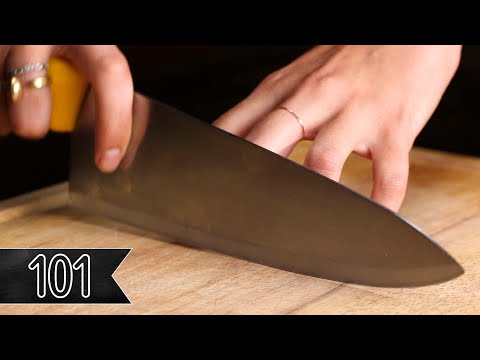
A whetstone is a different kind of stone, in some cases natural, in some cases synthetic. Some whetstones are OK to wet, others not. For instance, soaking a synthetic whetstone can significantly shorten its life-span. Again, consult the instructions provided by your stone's manufacturer before doing anything you're not particular about. Illustration: Kelly Miller.
Tips Always sharpen in the exact same direction, whether it's front-to-back or back-to-front. Do not believe the hype about knives that supposedly "never require honing." Cutting produces friction, and friction triggers a knife's edge to lose its sharpness. There's no avoiding the laws of physics. Do not attempt to sharpen Take care of your knife so it retains its edge longer.
6 Simple Techniques For Diamond Sharpening Stones
Get Your Great Afternoon Merchandise Here: For additional information on these knives, contact David Holly at david@knifemerchant.com or go to knifemerchant.com Let us know how you enjoy your Minonokuni. Knife Merchant 7887 Dunbrook Road Suite HSan Diego, CA 92126800-714-8226www. knifemerchant.com .
The real procedure of sharpening your hunting knife's edge of your knife's blade is a relatively simple process which may look like it needs little explanation. However there's a lot that actually goes into honing your knife appropriately. For instance, different kinds of blade steels and different types of blade grinds need various grits and different honing angles.
Bushcraft or field knives will more than likely be sharpened by a pocket sharpener as you will have them out in the field. It's likewise essential to have the appropriate whetstone for the task. Finding the right whetstone can be made complex, yet it's an integral part of the knife honing procedure needing a more in-depth explanation.
Excitement About Diamond Sharpening Stones
Contents Whetstone Basics: Blade Grind 101: Blade Steel Grinding Tips: Types of Whetstones: Finish up: Contents 5 Finish up: Before we examine the real process of honing a knife blade's edge, let's first analyze the nature of whetstones. For instance, whetstones are divided into different groups including naturally taking place stones such as Japanese Water Stones and Arkansas Oil Stones and male made stones such as Crystalon (aluminum oxide) and India Stones (silicon carbide).

In addition, there are extra kinds of guy made whetstones such as diamond refines and ceramic hones that can be utilized either with or without water to oil them. Plus, both natural and man made whetstones are available in different grits with the more coarse grits being more abrasive and the finer grits being less abrasive.
So, let's begin with a description of blade grinds however, in order to do that, we first require to specify some terminology. When it comes to a Saber Grind or a Hollow grind, the line located on the side of the blade above the cutting edge that extends from the back of the blade to the idea.
Natural Sharpening Stones – An Overview
Also, the widest cross area of any knife blade is called the Spinal column. For that reason, a Saber Grind is a blade grind who's Main Bevel Line is located low on the face of the blade, near the Leading edge, with either flat or somewhat concave Primary Bevels so that it creates a relatively thick Primary Bevel.
With a Flat Grind, there is no Main Bevel Line because the face of the blade is ground flat from the Leading edge to the Spinal column which creates an edge that is sharper than a Saber Grind and harder than a Hollow Grind. Consequently, knives implied for sturdy usage usually have Saber Grinds whereas, knives implied for basic function usage generally have Flat Grind and, knives implied for hunting generally have Hollow Grinds.
This is important so that they can hold up against the shock produced when the knife is used to chop and, by the same token, blades with Hollow Grinds will require to be sharpened at much lower edge bevel angles (10 to 15 degrees). Blades with Flat Grinds will require to be sharpened at angles in between the two depending of the density of the blade's Spine.
Indicators on Knife Sharpening Stone You Need To Know
For instance, knives with relatively soft blades such as 1095 or SK-5 varying from 50-55 RHC are usually utilized for big, heavy, blades with Saber Grinds and thus, although they sharpen relatively rapidly, they also tend to sustain the best quantity of damage to their edges and thus, they typically require the highest degree of repair usually.
 The expert blog 5832